



Folk Art
Folk art refers to utilitarian and decorative works produced by artists and artisans who reflect community and cultural traditions. The producers of folk art are individuals whose creative work conveys the cultural identity of their community rather than an individual or idiosyncratic artistic identity. The skills and techniques used by folk artists are generally acquired through apprenticeships in informal community settings, although some individuals also incorporate elements acquired through formal education. The folk arts of Latin America and the Caribbean are particularly diverse creations made from cloth, wood, metal, clay, paper, and other types of media.
Born into a family of weavers, Mario Chavez Gutierrez calls his workshop Teotl-Tlan, which means House of God in the Nahuatl language. His designs are innovative but aim to preserve and promote the beauty of the Zapotec art from the Oaxaca region of Mexico. The wool is washed and carded by women, then dyed with natural colors from trees and local flowers. Weaving is a process that can take anywhere between one day to a whole month.
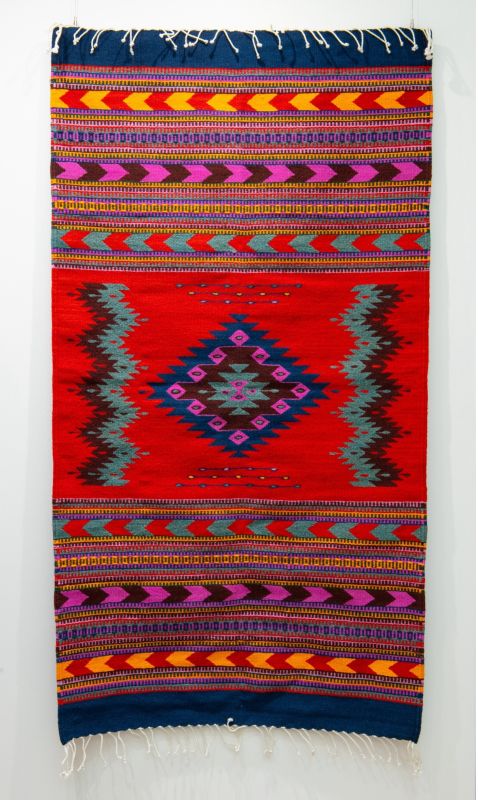
Zapotec Passion
Mario Chávez Gutiérrez
Mexico, 2021
Wool and natural dyes
Purchased by the Latin American Cultural Center from UNICEF Market
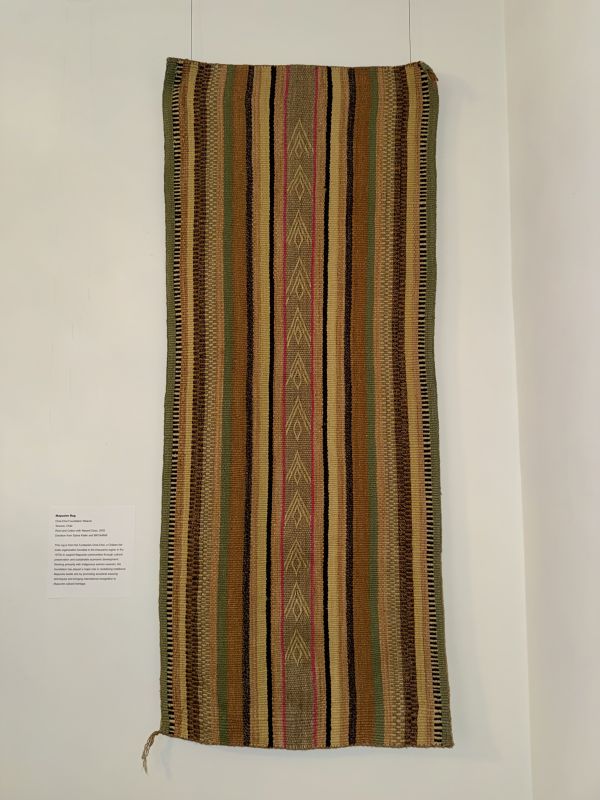
One of the best-known and oldest arts practiced by the Mapuche people of the Patagonian region of South America is the weaving of textiles. Women practice and pass on their knowledge of textile spinning, weaving, and design techniques. This example of Mapuche weaving came from the Chol-Chol Foundation in Temuco, Chile, located about 400 miles south of Santiago. The Foundation was founded by the late former priest James Mundell in 1971 to help local weavers continue to practice their crafts. Traditional designs are woven into the rectangular weavings, which are used as small rugs, table runners, or bed throws. The poncho is referred to as a Manta Cacique or chief’s cape. They were worn by the Loncos, tribal leaders, and Weupifes, people charged with transmitting knowledge from generation to generation.
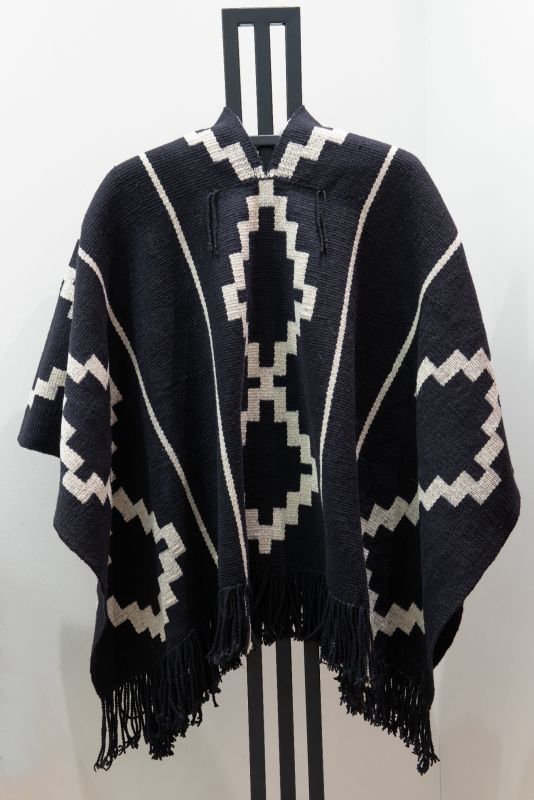
Manta Cacique (Chief’s Cape)
Nancy Epulef Barra
Temuco, Auracania, Chile, 2021
Wool and natural dyes
Latin American Cultural Center purchase from Fundacíón Chol Chol
Mayan villagers from around Lake Atitlán in the Guatemala Highlands have an artistic tradition that dates to pre-Conquest times. In the 1970s, individuals from San Pedro la Laguna began painting scenes from their daily life. The paintings became popular with tourists and beyond. In 1999, UNESCO recognized the quality and importance of this tradition with the publication of Arte naïf Guatemala: pintura maya guatemalteca contemporánea (Guatemalan Naïve Art: Contemporary Guatemalan Maya Painting). Palo Volador (Pole Flyer) is one of the earliest of these paintings. The main element shows the masked dancers surrounding the individuals who tie their feet to ropes attached to the top of a tall pole, then slowly descend to the ground while spinning around the pole.
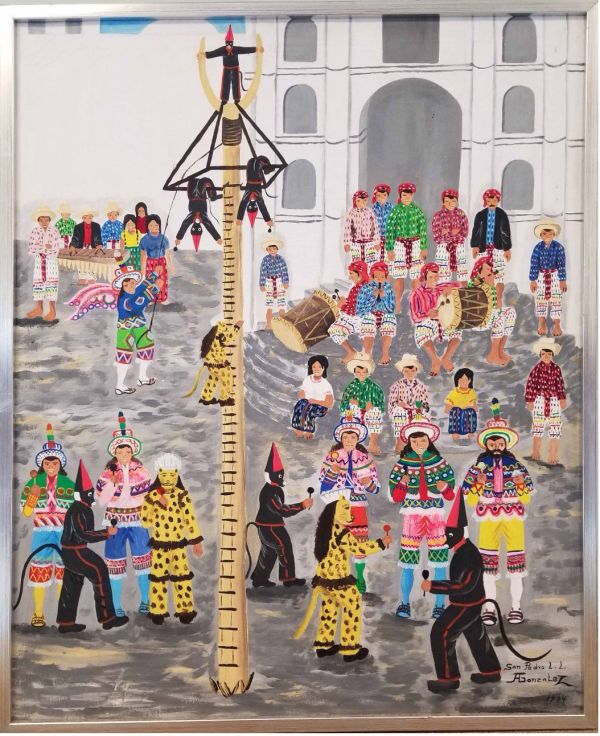
Palo Volador (Pole Flyer)
José Antonio González Escobar
San Pedro la Laguna, Guatemala, 1974
Acrylic on Canvas
Donation from James B. Richardson III
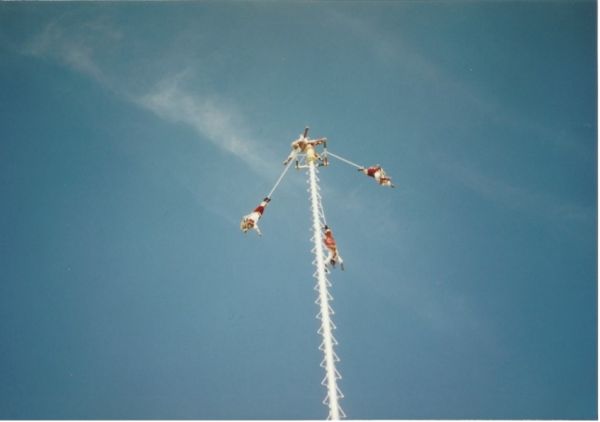
The current versión of pole flyers Voladores de Papantla, near the archaeological site of El Tajín, Veracruz, Mexico. Photo: Bill DeWalt 1999
Alebrijes are Mexican wood sculptures of whimsical and fantastic creatures.
Based on the work of other artists who originally produced these creatures in papier-mâché, artists in the Mexican state of Oaxaca adapted the style to carving these creatures in wood. The work of artists in three Oaxacan villages, San Antonio Arrazola, San Martín Tilcajete, and La Unión Tejalapan has become commercially successful, and their work is now in museums and private collections throughout the world. This folk art tradition is now threatened because of diminished rates of tourism in recent years, owing to political instability and the Covid-19 pandemic.
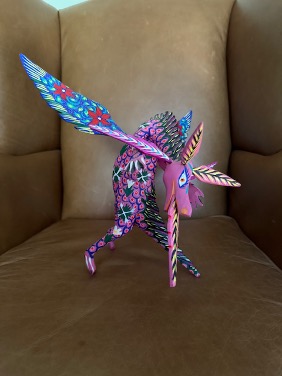
Dragon Alebrije
Anonymous
Oaxaca, Oaxaca, Mexico, 1984
Copal wood, paints
Loan from Sylvia Keller and Bill DeWalt
Indigenous peoples of Latin America have long produced baskets for everyday domestic use, and today these works are also created as forms of artistic expression that contribute to household economies. Basketry from the Amazon region of northern South America is among the most accomplished and visually striking expressions of these traditions. Groups such as the Ye’kwana, Piaroa, and other Indigenous peoples of the Venezuelan Amazon–Orinoco region used baskets like these in food preparation, storage, and serving. Animals, geometric designs, and abstract motifs used on the baskets reflect themes found in their mythology, cosmology, and cultural identity.
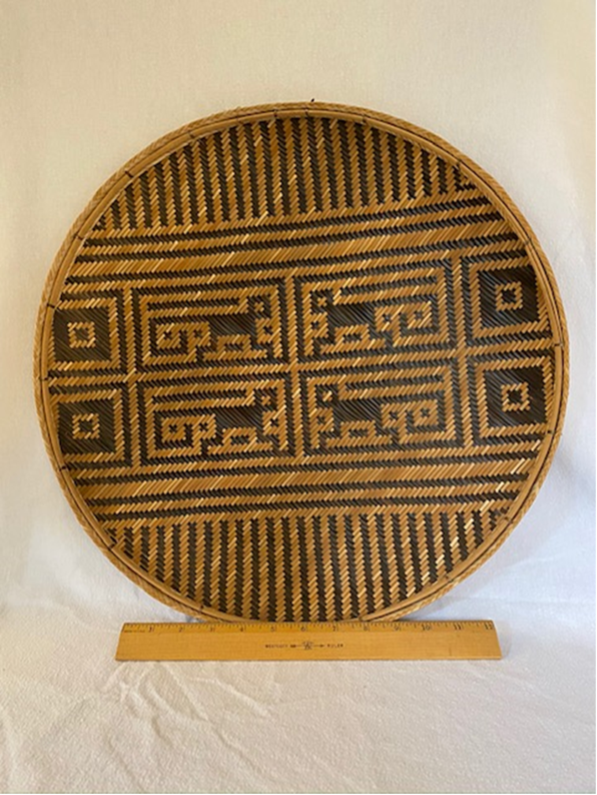
Circular tray (waja)
Unknown Ye’kwana Artist
Purchased in Caracas, Venezuela, 1991
Arumã (likely Heteropsis sp.) fiber and natural dyes
Loan from the collection of Bill DeWalt and Sylvia Keller
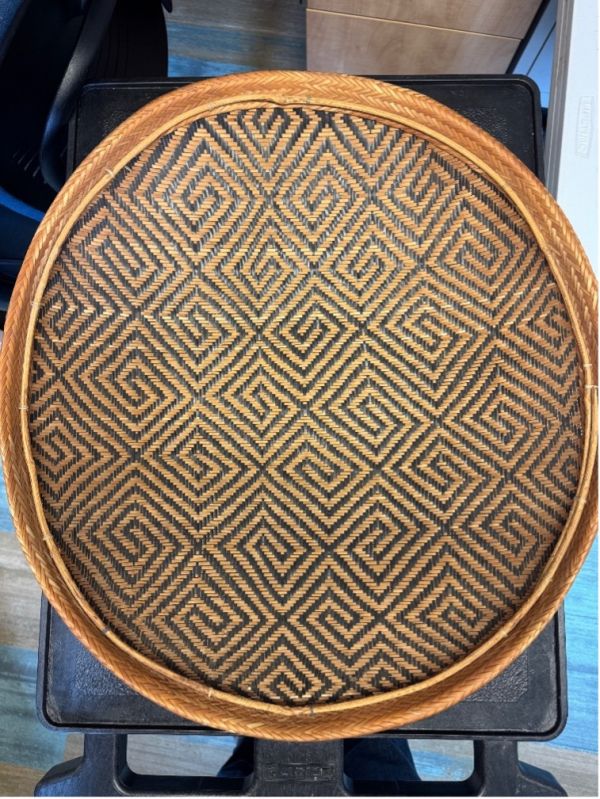
Circular Tray (guapa)
Unknown Piaroa (De'aruhua) Artist
Purchased at Isla de Ratón, Venezuela (on the Orinoco River), 1964
Naranjillo fibers, natural dyes
Donation from William Smole
Folk art traditions continue to arise and evolve over time and in this an artist has taken a popular, well-known painting by Frida Kahlo and transformed it into a catrina. In Mexico, catrinas are female skeletons in ornate hats and costumes that are often associated with Day of the Dead celebrations. The tradition arose in the early 1900s when the political cartoonist José Guadelupe began doing satirical etchings of skeletons to remind people that they would all eventually die. Over the years, these catrinas in wooden, papier-maché, plastic or clay form have become popular objects in Mexico and around the world.
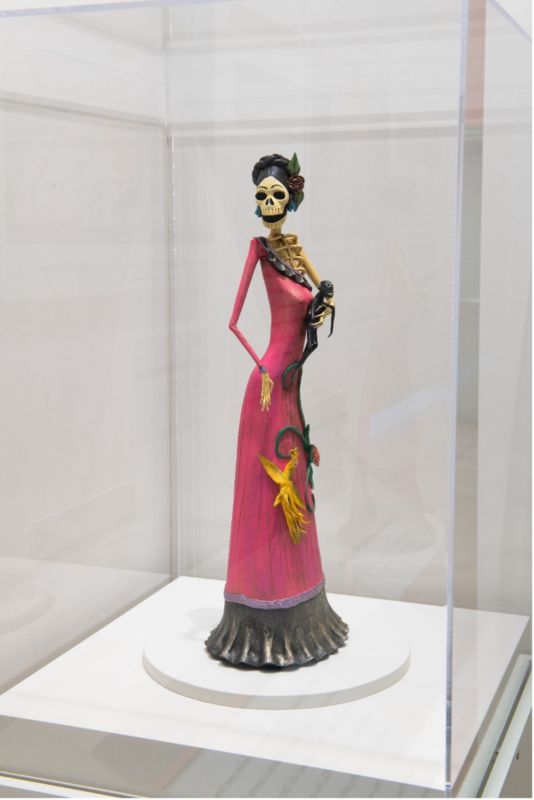
Catrina Frida Kahlo
Unknown Artist
Morelia, Mexico, 2004
Clay, paints
Loan from collection of Bill DeWalt and Sylvia Keller
FOLK ART IN OTHER AREAS OF THE MUSEUM
The Latin American Cultural Center is fortunate to have a collection of other superb pieces of folk art that are in other areas of the building. Information about these objects is included here.
Most Zapotec woolen rugs are made in Teotitlán del Valle, a village of about 5,000 people located some 18 miles (30 km) east of the city of Oaxaca in Mexico. Buyers can see the rug making process by visiting this and other nearby villages. Most of the weavers speak their native Zapotec language as well as Spanish.
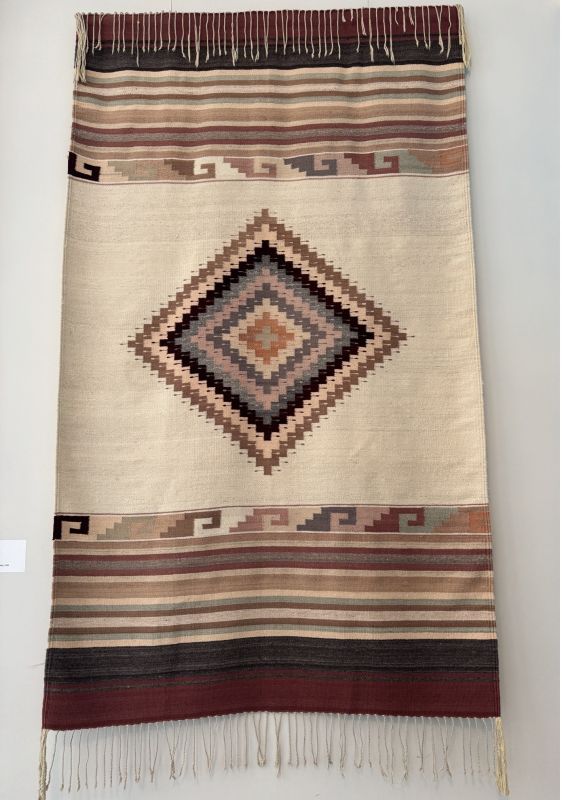
Zapotec Rug
Unknown Artist
Teotitlán del Valle, Oaxaca, Mexico, 1987
Wool with natural dyes
Donation from Sylvia Keller and Bill DeWalt
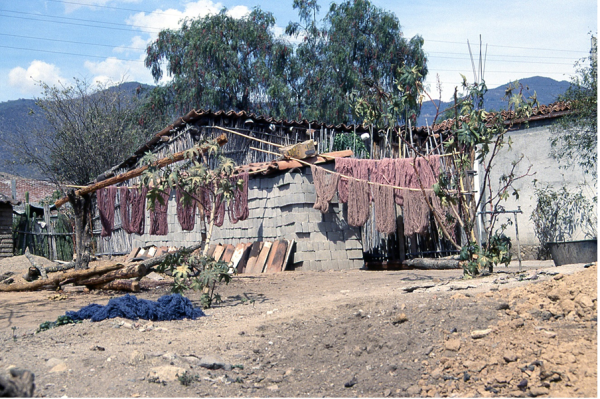
Newly dyed wool drying in the sun at a backyard in Teotitlán del Valle. Photo: Bill DeWalt 1987
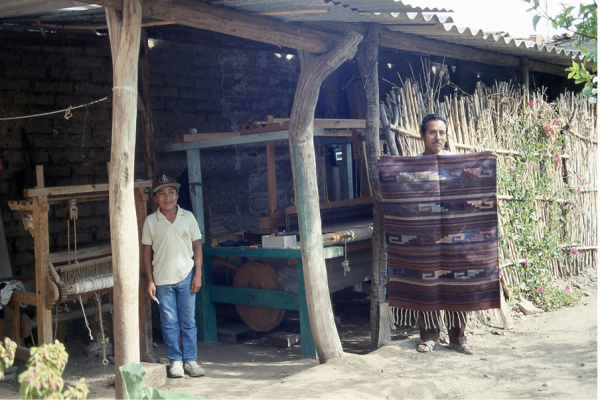
Vendors and one of the looms at a shop in Teotitlán del Valle. Photo: Bill DeWalt 1987
Serapes are among the most celebrated textile traditions of northern Mexico, particularly in and around Saltillo, Coahuila. Characterized by bold horizontal bands and a central diamond motif, these textiles were historically worn as cloaks but also functioned as markers of regional identity and craftsmanship. By the early twentieth century, serapes were increasingly produced for broader markets while maintaining established design conventions. This example reflects the refined symmetry and color gradation associated with Saltillo-style weaving.
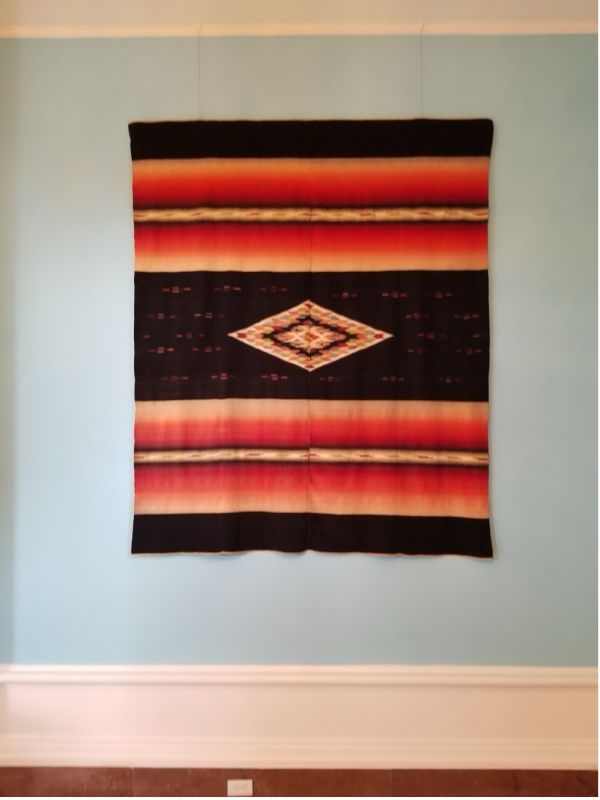
Serape (poncho)
Unknown Artist
Saltillo, Coahuila, Mexico, ca. 1930
Wool, natural dyes
Donation of Patricia Forbes and Patrick Keating
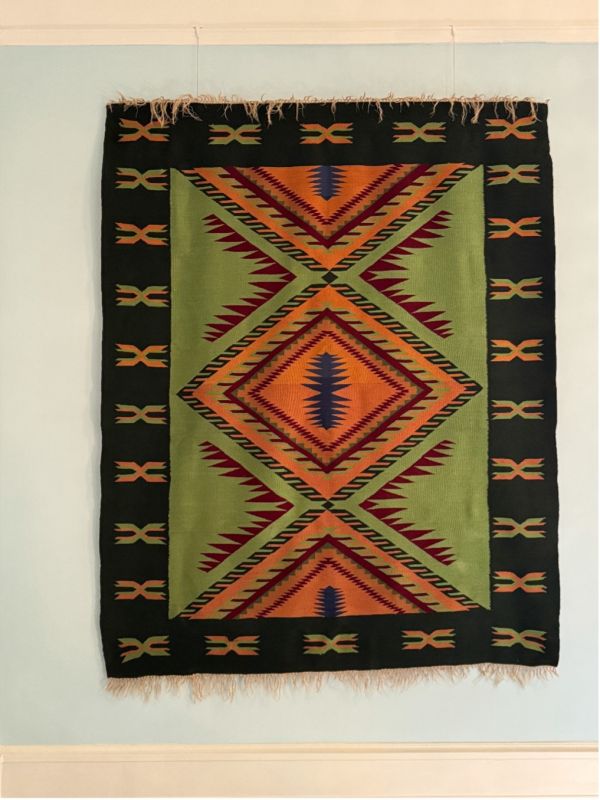
This geometric textile reflects the long tradition of weaving in northern Mexico and the U.S.–Mexico borderlands. Its diamond medallions, serrated motifs, and vivid color contrasts recall the designs of Saltillo serapes and related regional weaving traditions. Textiles of this type were influenced by centuries of artistic exchange among Indigenous, Hispanic, and regional weaving communities of northern Mexico and the American Southwest.
Mapuche Rug
Artist: Chol-Chol Foundation Weaver
Temuco, Chile
2002
Wool and Cotton with Natural Dyes
Donation from Sylvia Keller and Bill DeWalt
This rug is from the Fundación Chol-Chol, a Chilean fair-trade organization founded in the Araucanía region in the 1970s to support Mapuche communities through cultural preservation and sustainable economic development. Working primarily with Indigenous women weavers, the foundation has played a major role in revitalizing traditional Mapuche textile arts by promoting ancestral weaving techniques and bringing international recognition to Mapuche cultural heritage.
Tiburcio Soteno has been recognized as one of the Great Masters of Mexican Folk Art. Shaped by hand and made entirely from clay, many of Tiburcio’s works are produced in the natural colors of the materials allowing the artistry to speak for itself. He works primarily on religious themes, in this case showing the Archangel Michael slaying the devil.
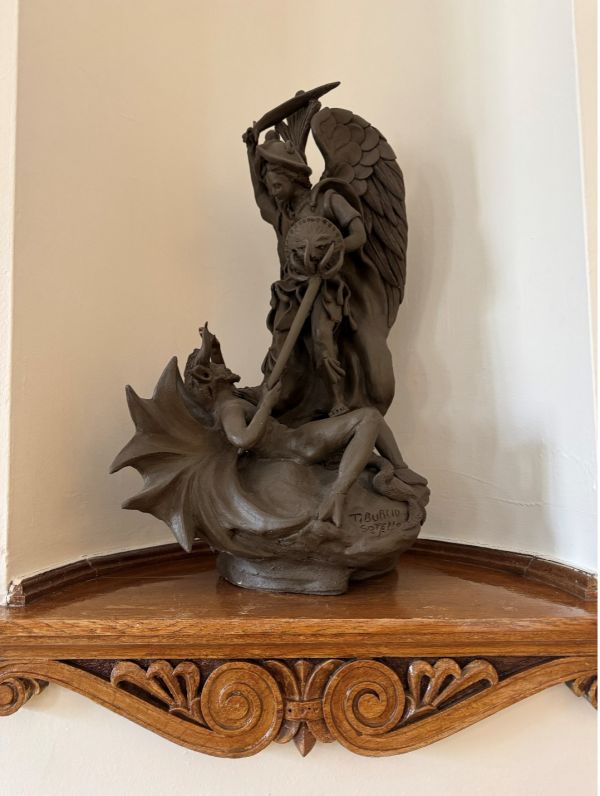
Archangel Michael Defeating Satan
Tiburcio Soteno Fernández
Metepec, State of Mexico, Mexico, circa 2010
Clay
Donation from Lisa Digioia-Nutini, in memory of Jean-Pierre Nutini, Hugo Nutini and Monique Lemaitre Leon
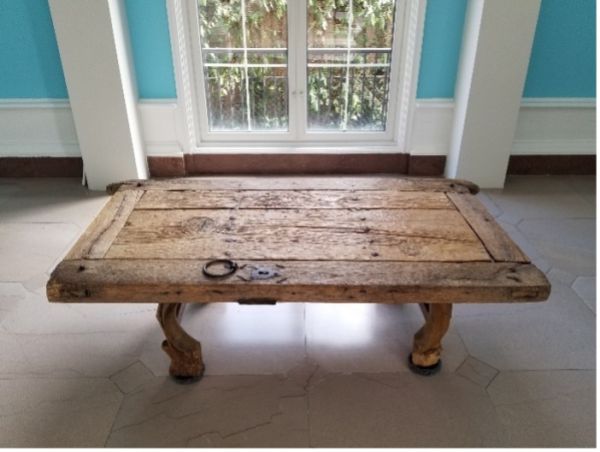
Table (Mesa)
Unknown artist
Mexico, late 20th century
Wood door with metal fittings on ox yolk repurposed as a table
Donation by Shirley Rust and S. Murray Rust, III
This richly imaginative Tree of Life celebrates global literature through the enduring language of Mexican folk art. The creation of Trees of Life grows out of ceramic traditions in the Mexican Central Highlands that date to between 1800 BCE and 1300 BCE. These sculptural forms were transformed by clergy in the early colonial period to be used as teaching tools to introduce Indigenous communities to the biblical story of creation. Traditionally, Trees of Life depicted religious themes—most commonly the story of Adam and Eve—but over time artisans have adapted the form to encompass a wide range of subjects.
Today, many Trees of Life are made on commission, reflecting the interests and ideas of their patrons. This example was commissioned by Sylvia Keller and Bill DeWalt, who suggested a Tree of Life with a literary theme during a 2009 visit to the workshop of Adrián Luis González in Metepec, Mexico. González, recognized in Great Masters of Mexican Folk Art, collaborated with his son, Miguel Ángel González, who led the design and production. Drawing on his literary knowledge, Miguel Ángel selected authors from around the world and created figures and iconic scenes to represent their works.
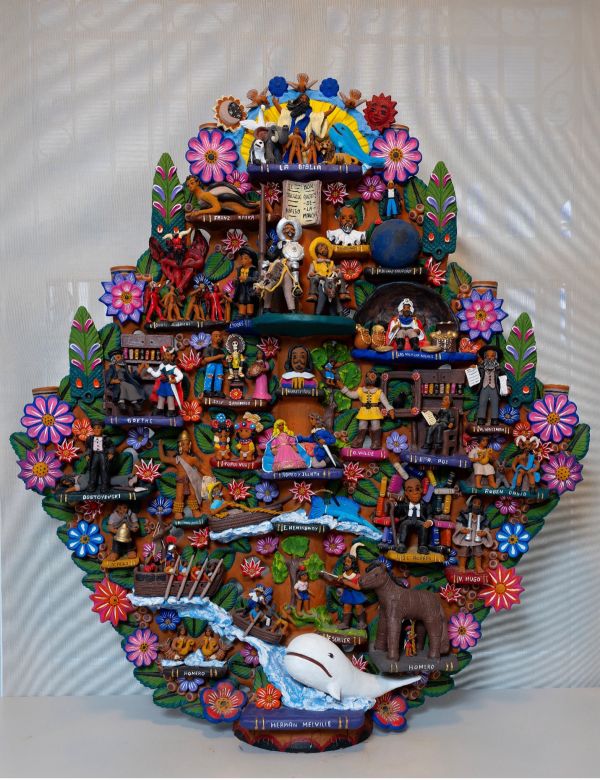
Tree of Life (Árbol de la vida)– Literary
Miguel Ángel González and Adrián Luis González
Metepec, State of Mexico, Mexico, 2009
Clay sculpture with Acrylic Paint
Donation from Sylvia Keller and Bill DeWalt
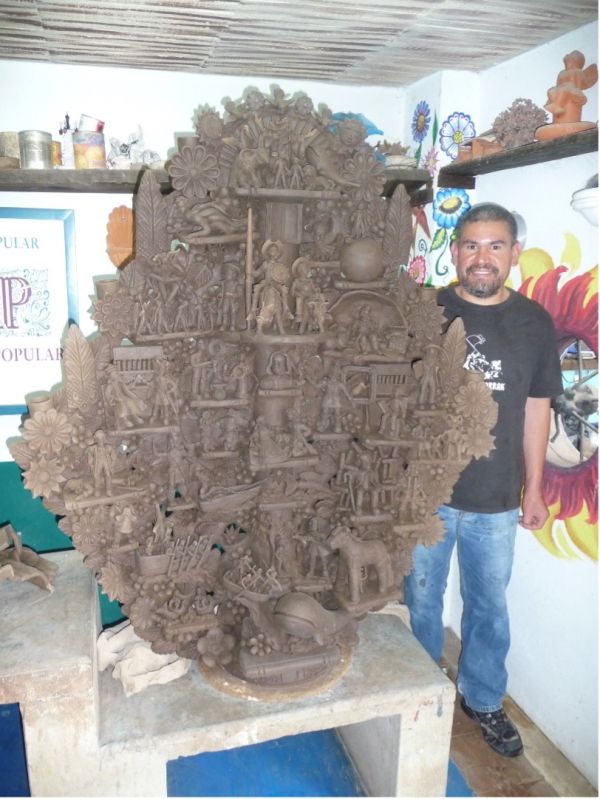
Miguel Ángel González with the Tree of Life before it was painted. Photo: Adrian Luis González 2009
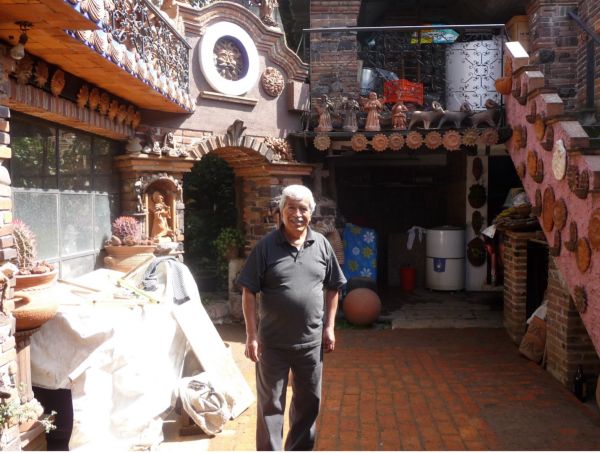
Adrian Luis Gonzalez in his home and workshop in Metepec, Mexico. Photo: Bill DeWalt 2009