



Music and Dance
Rhythms and sounds of indigenous Latin Americans have blended with musical traditions from Africa, Europe, and beyond to provide some of the most unique and influential music in the world. Genres of Latin American music like bachata, bossa nova, cumbia, danzón, huayno, mariachi, merengue, reggae, rumba, salsa, samba, son, and tango are popular both in the region as well as around the world. Elements of some of these styles have been incorporated into the music of other cultures, giving rise to hybrid genres such as Latin pop, rock, jazz, hip hop, and reggaetón.
Along with these popular forms of music, Latin America has also contributed to the catalogue of classical music and jazz. Guitar music from composers like Antonio Lauro, Leo Brower, Matilda Casazola and Manuel Ponce is played by musicians throughout the world. In addition, these, and other composers such as Heitor Villa-Lobos, Alberto Ginastera, and Astor Piazzolla composed many works that have left a legacy in the classical world. Antônio Carlos (Tom) Jobim deserves special mention for his global influence. A master composer and arranger, he is best known for the development of bossa nova music through original songs like “The Girl from Ipanema,” “Wave,” “One Note Samba,” and “Desafinado.” His album with Stan Getz, Getz/Gilberto,was the first jazz album to win the Grammy Award for Album of the Year.
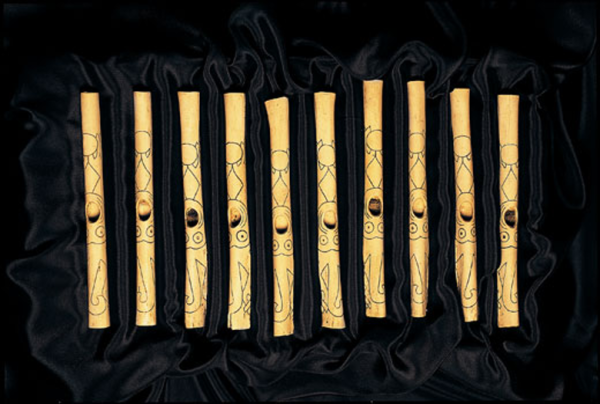
To date, the oldest musical instruments in Latin America come from Caral, Peru and date to as early as 2200 BCE. At that site archaeologists found 32 flutes made of the wing bones of pelicans and 37 cornetts made of deer and llama bones. Flutes of Caral, “First City in the New World?,” Smithsonian Magazine, August 2002. Photo: George Steinmetz
Capoeira is a Brazilian martial art that combines music, dance, and acrobatic elements. Capoeira began among enslaved Africans at the beginning of the 16th century, who cleverly used dance and music to conceal that they were practicing fighting techniques for self-defense. After slavery was abolished in Brazil at the end of the 19th century, capoeira was declared illegal. By the 1920s, it became more accepted and martial artists began to incorporate capoeira techniques into their practices. Today, capoeira is practiced around the world, and in 2014, capoeira was granted special protected status as an intangible cultural heritage by UNESCO.
Capoeira instruments
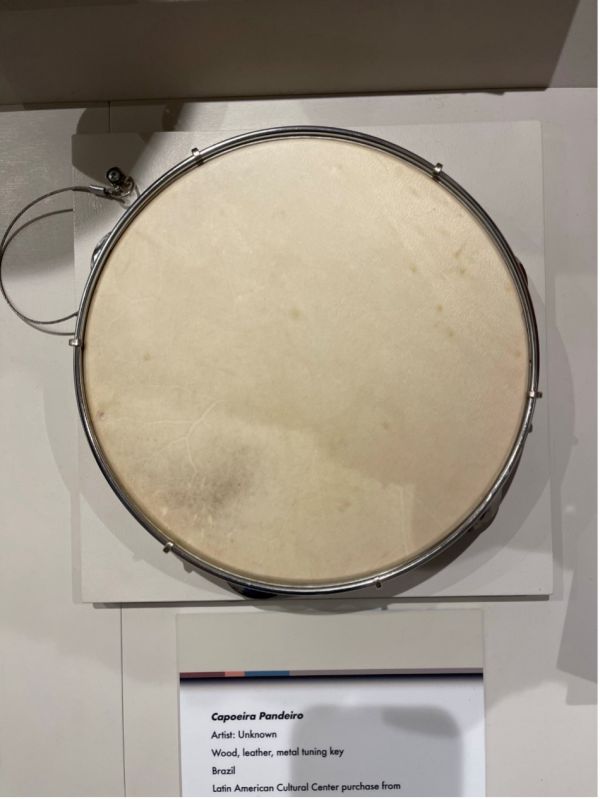
Capoeira Pandeiro
Unknown Artist
Brazil, 2021
Wood, leather, metal tuning key
Latin American Cultural Center purchase from CapoeiraConnection
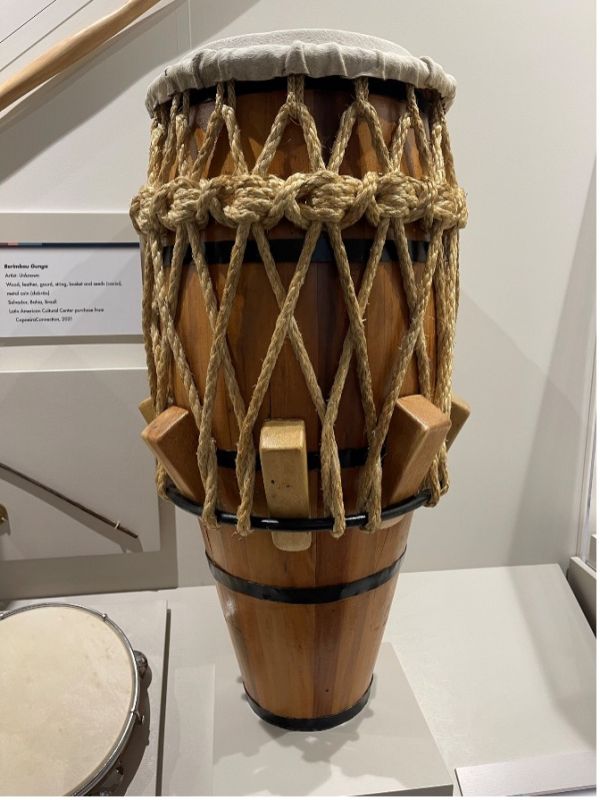
Atabaque de Capoiera
Mestre Negão
São Paulo, Brazil, 2021
Wood, sisal, rope, steel, animal skin
Latin American Cultural Center Collection
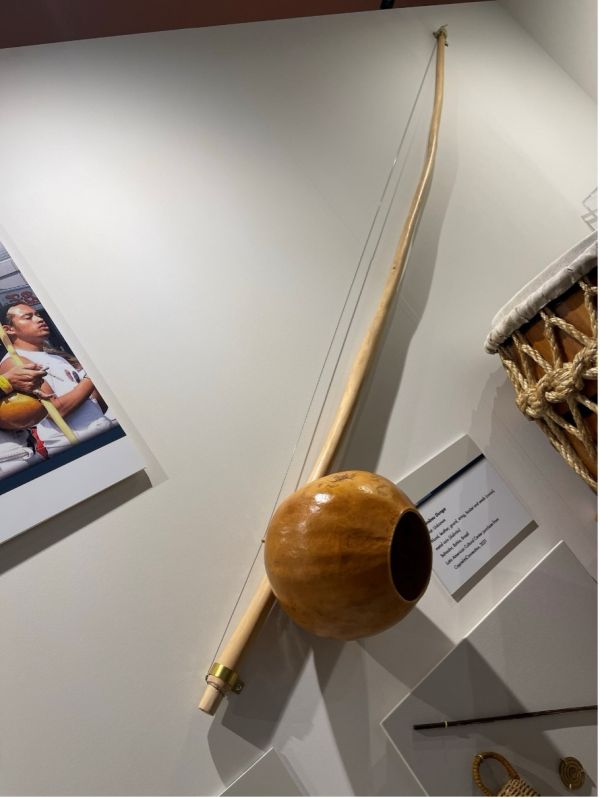
Berimbau Gunga
Unknown Artist
Salvador, Bahia, Brazil, 2021
Wood, leather, gourd, string, basket and seeds (caxixi), metal coin (dobrão)
Latin American Cultural Center purchase from CapoeiraConnection
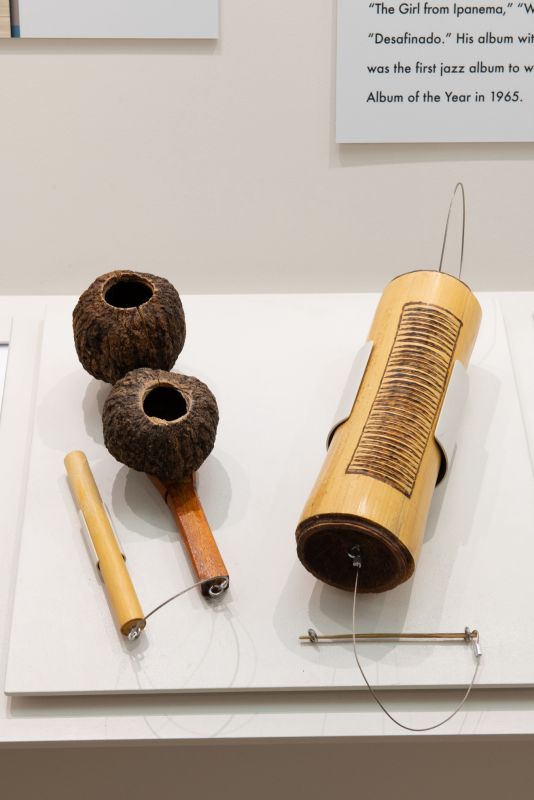
Agogo da castanha (Left)
Unknown Artist
Brazil, 2021
Wood and Brazil nut shells
Latin American Cultural Center purchase from CapoeiraConnection
Reco-reco (scraper) and ganzá (vessel rattle) combination (Right)
Unknown Artist
Brazil, 2021
Bamboo tube, wood
Latin American Cultural Center purchase from PanAfricanArts
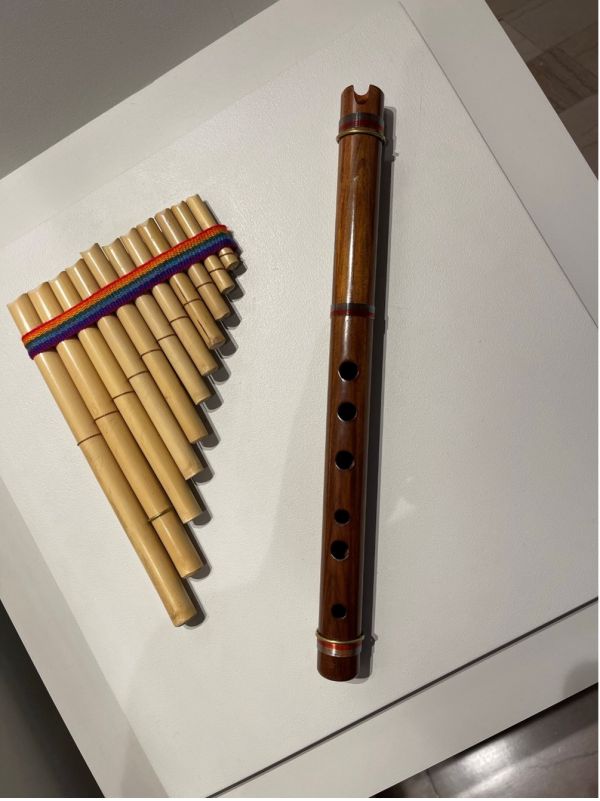
Zampoña (Panpipe)
Benito Tito
Lima, Peru, 2021
Bamboo reeds, nylon monofilament, synthetic fabric
Latin American Cultural Center Collection
Quena (flute)
Benito Tito
Lima, Peru, 2021
Jacaranda wood
Latin American Cultural Center Collection
An instrument dating back to the Inca Empire, this panpipe features eleven reed tubes of graduated length bound by colorful textiles. Known as a zampoña, this traditional Andean panpipe is handcrafted by Benito Tito.
The charango originated sometime after the Conquest among the Quechua and Aymara indigenous groups in the South American Andes. Modeled on European instruments, it is a small stringed instrument of the lute family that traditionally used an armadillo shell as the resonator. Widespread throughout the highlands of Bolivia, Peru, Ecuador, northern Chile, and northwestern Argentina, it primarily is played in traditional Andean music and often accompanied by panpipes.
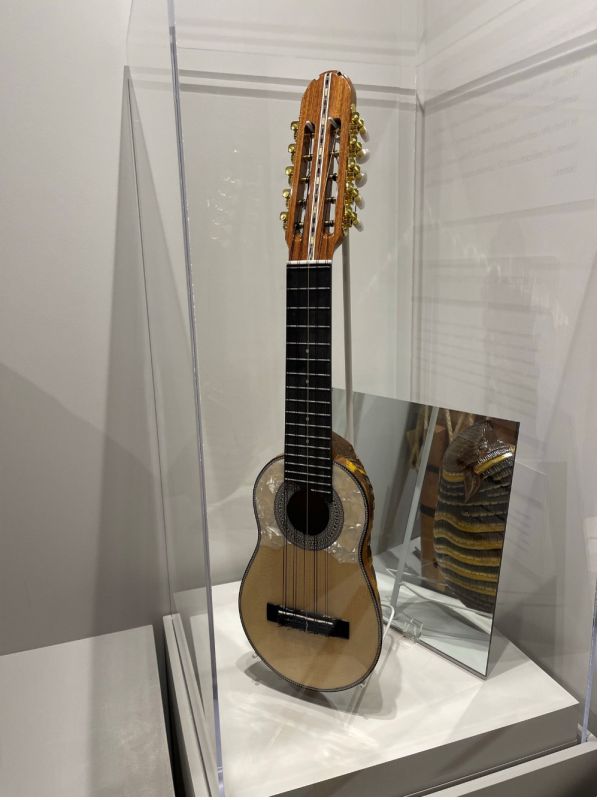
Charango
Sumakj-Llajtha
Bolivia, 2021
Fagara naranjillo, ebony, German spruce, rosewood
Latin American Cultural Center purchase from BolivianStuff.com
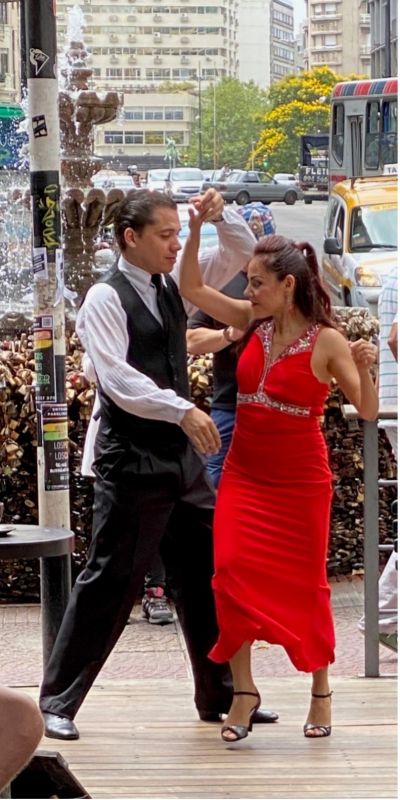
Tango music and dance are especially popular in Argentina and Uruguay. Here, dancers perform on a street corner popular with tourists in Montevideo, Uruguay. Photo: Bill DeWalt 2020