



Architecture
Modern Latin American architecture is considered among the best in the world. It is inspired by the monumental structures and art of the pre-Columbian civilizations. Along with these influences, architects in Latin America have incorporated European Modernism to create masterpieces of design. Aided by a favorable climate, low labor costs, and governments that have wanted to proclaim their modernity, innovative projects have flourished across the region. The most ambitious building project is represented by Brasilia. When political leaders decided to build Brasilia, a new capital city in the interior of the country, Oscar Niemeyer was commissioned to design a presidential palace and a master plan for the city. Niemeyer designed and built almost all the major buildings of the city that became the capital of Brazil in 1960.
Established in a remote area in the middle of the country, the core of Brasilia demonstrates urban planning on a massive scale. Brazil moved its capital from Rio de Janeiro to the new city in 1960. Now the country’s third largest city, Brasilia has been designated as a UNESCO World Heritage Site due to its modernist architecture and uniquely artistic urban planning.
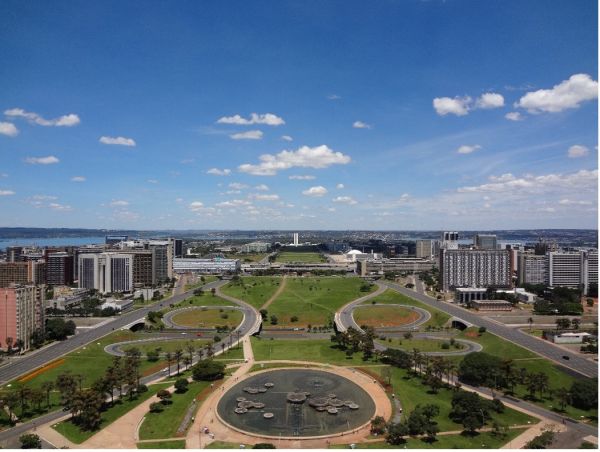
Brasilia's National Mall with the National Congress at the back. Photo: Leandro Pignatari 2014
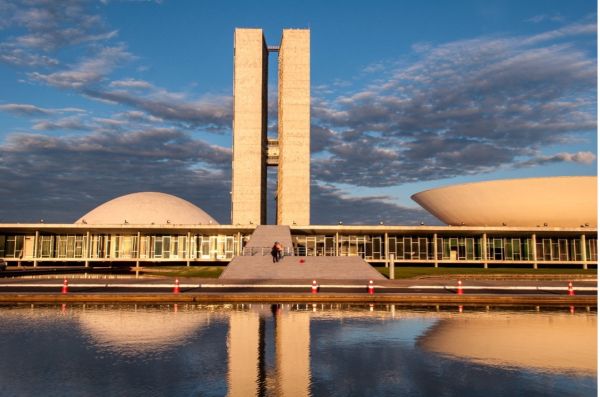
The Brazilian National Congress designed by Oscar Niemeyer. Photo: dabidy 2015
Bold and ambitious architectural projects have also occurred in other Latin American countries. The campus of the new Autonomous National University of Mexico (UNAM) in the 1950s and the new university city for the Central University of Venezuela in Caracas are notable examples. To date, five Latin Americans have won the noted Pritzker Architecture Prize—the Mexican Luis Barragán in 1980, Brazilians Oscar Niemeyer in 1988 and Paulo Mendes da Rocha in 2006, and Chileans Alejandro Aravena in 2016 and Smiljan Radíc Clarke in 2026.
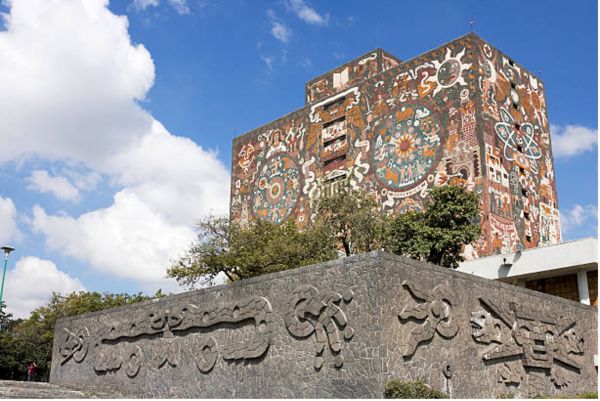
The magnificent main library of the Universidad Nacional Autónoma de Mèxico (UNAM) opened its doors in 1956. The Mexican artist Juan O’Gorman created the mosaic mural Historical Representation of Culture, which covers the building. The library and the central campus of the university were declared a UNESCO World Heritage site in 2007. Photo: abalcazar 2011
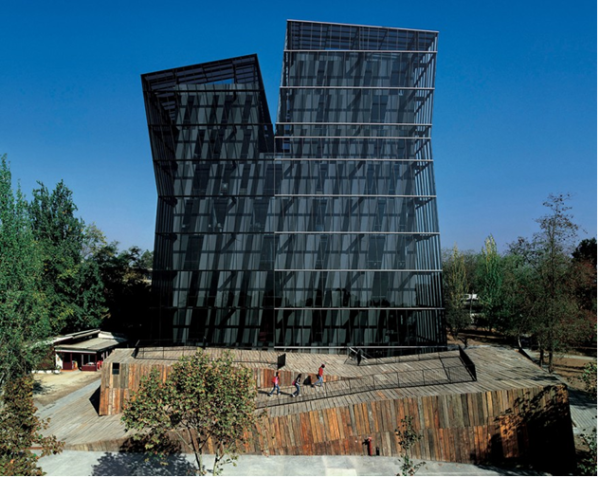
Known as the "Siamese Towers,” a workshop building at the School of Architecture of the Pontificia Universidad Católica de Chile, this project was designed by Alejandro Aravena, who won the Pritzker Architecture Prize in 2016. Aravena designed this and other buildings for his alma mater. Photo: Cristobal Palma