



Literature
Latin America has a distinguished literary tradition, and it would be no exaggeration to say that literature from the region has had an outsized influence on the world. Although many writers came before them, the world began to take notice of literature from the region in the mid-20th century. This began with Gabriela Mistral (a pseudonym used by Lucila Godoy Alcayaga), the Chilean poet, educator, and diplomat. Mistral’s poetry brought her to prominence in Chile in the 1920s and she later moved to Mexico to assist in educational reforms there. Mistral was awarded the Nobel Prize in literature in 1945.
A new movement called vanguardism began in the arts in Latin America in the early 20th century. This movement was revolutionary both in its political thinking and the way it encouraged experimentation in writing and in the visual arts. The Chilean poet, Pablo Neruda, shocked many by publishing a collection of erotically charged love poems that became extraordinarily influential and, along with his other works, won him a Nobel Prize. The Guatemalan Miguel Ángel Asturias integrated Mayan mythology and anthropology into his novels along with revolutionary political positions. This early expression of what is now known as magical realism—blending a realistic portrayal of the world with fantastic or magical elements—became a characteristic of a boom in Latin American literature. Colombian Gabriel García Márquez’s One Hundred Years of Solitude has become one of the most influential novels in history.
Nine writers from Latin America and the Caribbean have been awarded the Nobel Prize in Literature.
| Writer | Year |
|---|---|
| Gabriela Mistral (Chile) | 1945 |
| Saint-John Perse (Guadeloupe) | 1960 |
| Miguel Ángel Asturias (Guatemala) | 1967 |
| Pablo Neruda (Chile) | 1971 |
| Gabriel García Márquez (Colombia) | 1982 |
| Octavio Paz (México) | 1990 |
| Derek Walcott (St. Lucia) | 1992 |
| V.S. Naipul (Trinidad and Tobago) | 2001 |
| Mario Vargas Llosa (Perú) | 2010 |
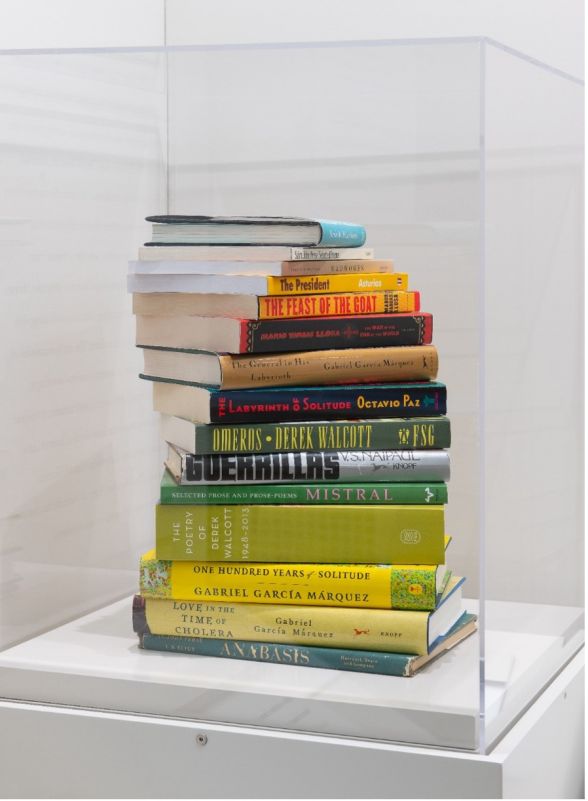
A selection of books by Nobel Prize Winners from Latin America