



Religion in Latin America
Religion was used as an important tool by the conquerors to subjugate the indigenous populations and as a result, Catholic Christianity has historically been the dominant faith in Latin America. Churches and cathedrals were often constructed on the ruins of the temples and sacred sites of the native people. Considerable wealth was expended in filling these churches with richly adorned interiors and Christian images. Fiestas and parades that celebrate the life of Jesus and honor Catholic saints occur frequently in almost every village, town, and city neighborhood. When Jorge Mario Bergoglio of Argentina was elected Pope Francis in 2013, he became the first person from the Americas to occupy that exalted position within the church.
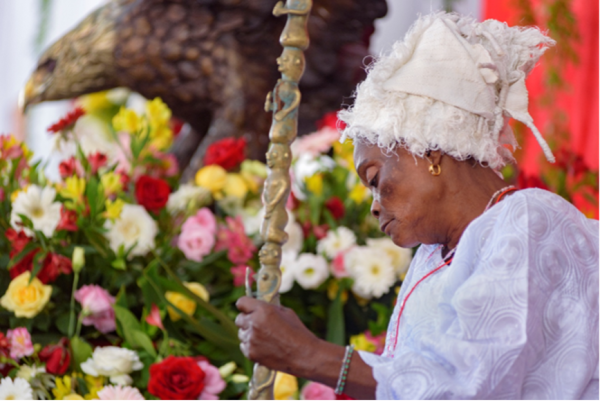
Through a process called syncretism, beliefs and traditions from different parts of the world have combined to create the religious systems of Latin America. Many elements of indigenous rituals and beliefs continue to be practiced both within, and parallel to, Catholicism. African slaves brought their own belief systems, which also added to the mix of religious traditions in Latin America. Various Afro-Latin American traditions such as Santería, Candomblé, Umbanda, Macumba, and voodoo religions are practiced, primarily in Cuba, Brazil, and Haiti. In recent years, Protestant sects have converted many people to their form of worship, thus adding new elements to the religious mix.
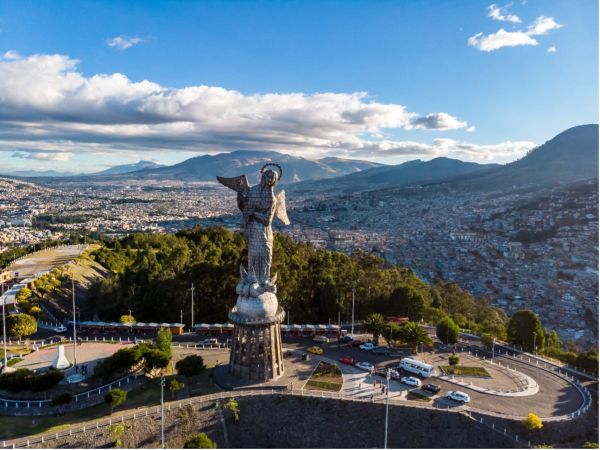
Bernardo de Legarda was a mestizo artist who created the sculpture Immaculada (the Immaculate One) that is now in the Metropolitan Cathedral of Quito, Ecuador. A large replica of his work, which became known as the Virgin of Quito, now watches over Quito from one of the hills overlooking the city. Photo by Jarno Verdonk 2021.
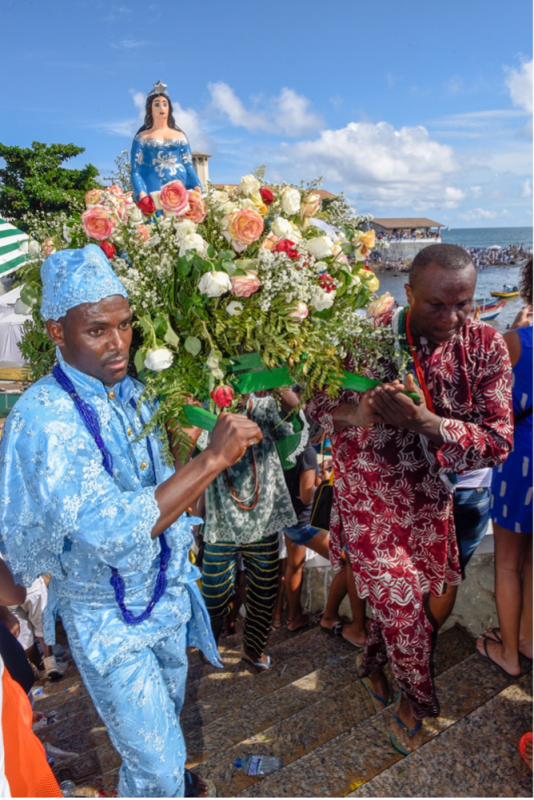
People during the celebration of Yemanja in Salvador Bahia, Brazil. Photo by Photoman.
Orixas are the nature gods of the Afro-Brazilian religion called candomblé. In Africa, these were mythical heroes, kings, queens, and ancestors raised to the status of gods. Hundreds of these gods are recognized but some are more powerful than others.
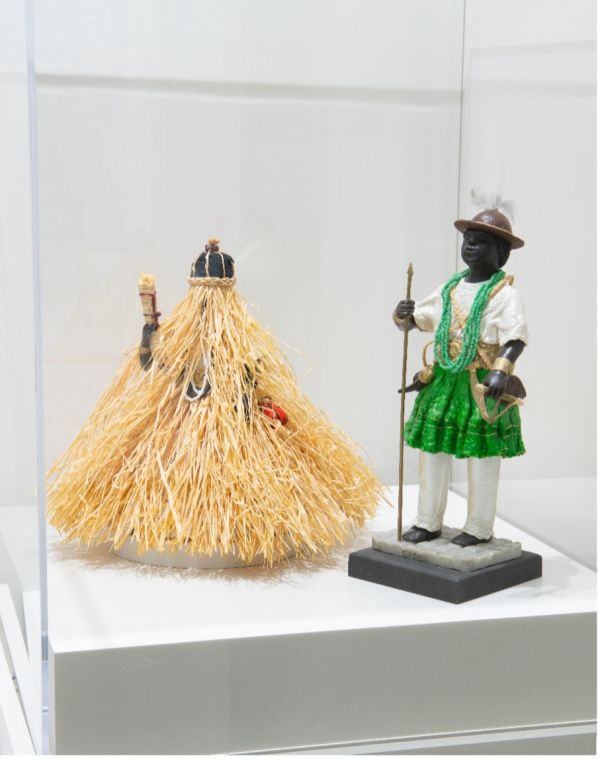
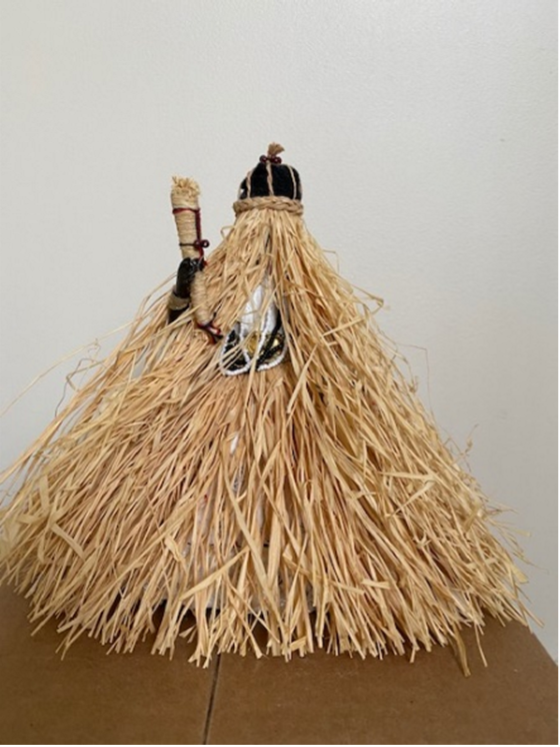
Of the Orixas, Omolu may be the most feared because he is the god of smallpox and other infectious diseases, but he is also respected for his understanding of human nature. His dance, performed with the mask and body-cloak of raffia, symbolizes his own struggles as well as the overall struggles of living life on Earth.
Omolu Figure
Cibele Sales and Tamara Campos
Salvador, Bahia, Brazil, 2001
Porcelain, plastic, straw, fabric, seeds
Loan from collection of Sylvia Keller and Bill DeWalt
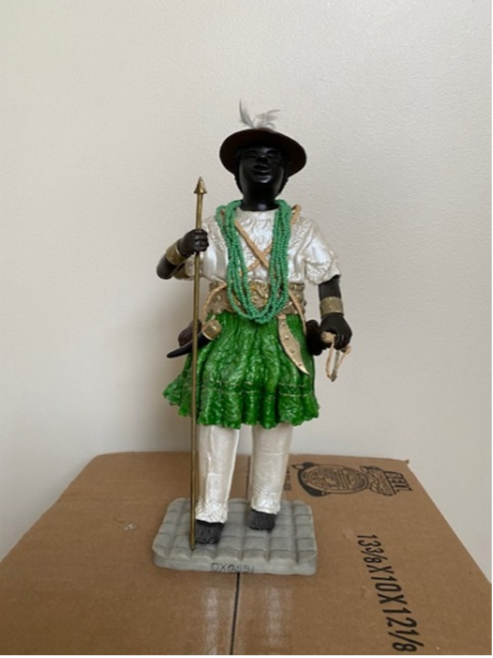
Oxossi, the god of prosperity, is commonly associated with the hunt and providing food, but also has a love for the arts. In parades held to honor Oxossi, he is often shown with his bow, arrows, and other hunting tools. In another example of religious syncretism, Oxossi is often associated with Saint George In the Bahia region of Brazil.
Oxossi Figure
Cibele Sales and Tamara Campos
Salvador, Bahia, Brazil, 2001
Porcelain, plastic, beads, feathers
Loan from collection of Sylvia Keller and Bill DeWalt